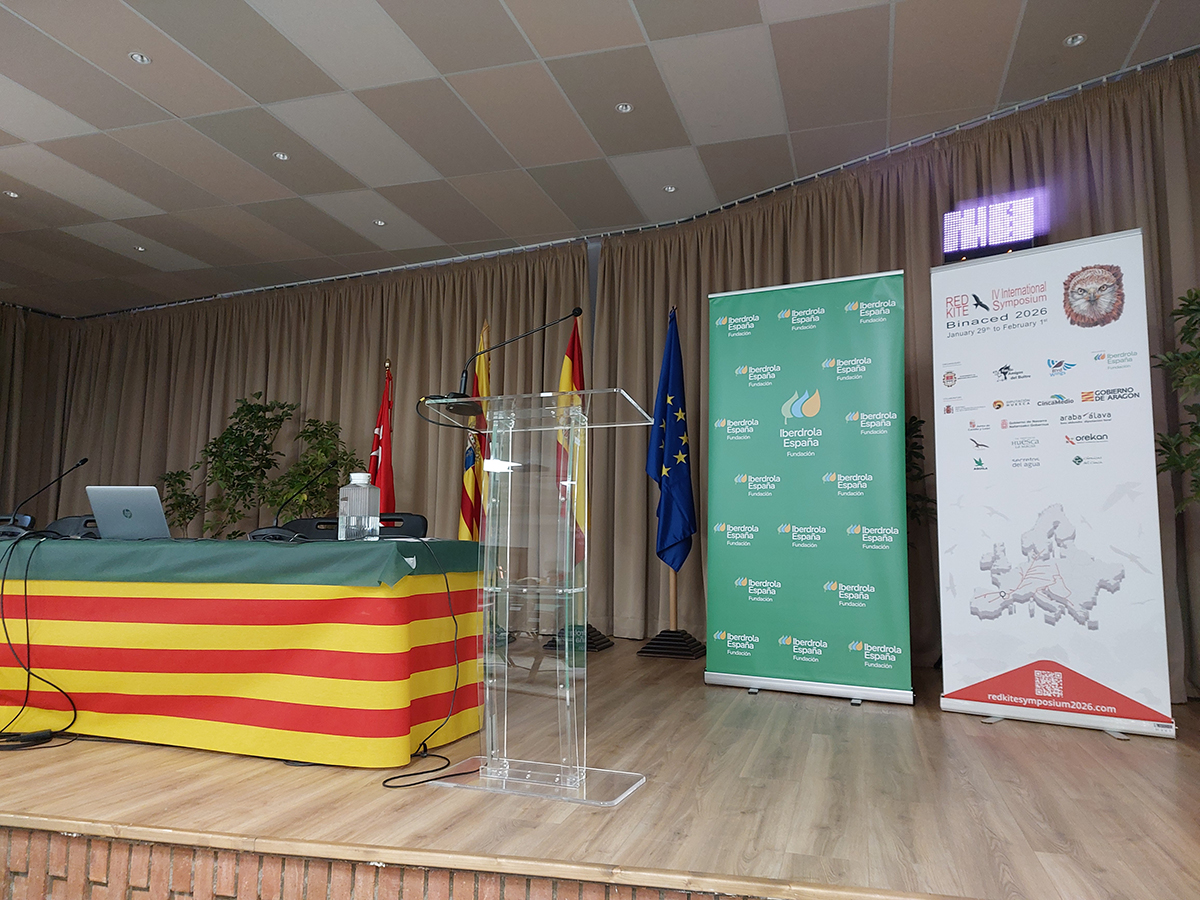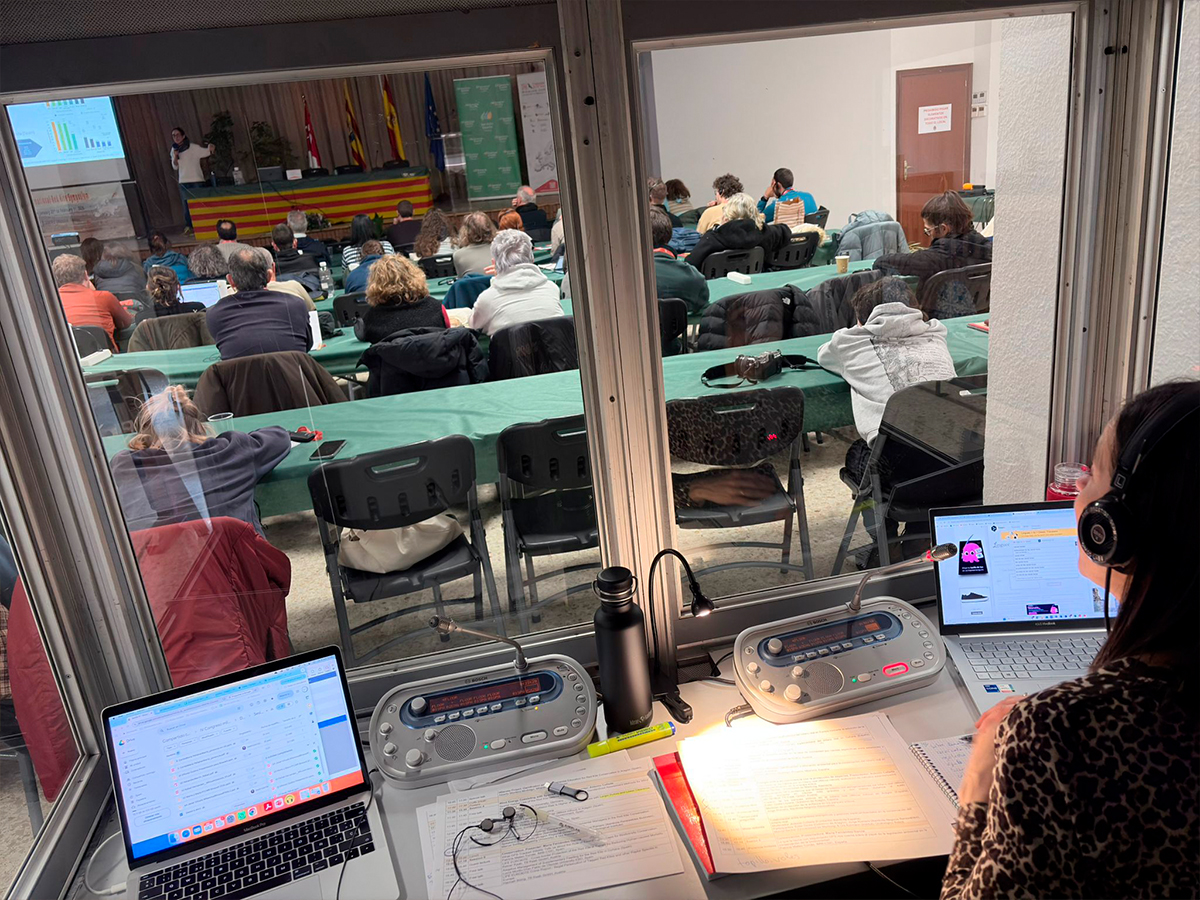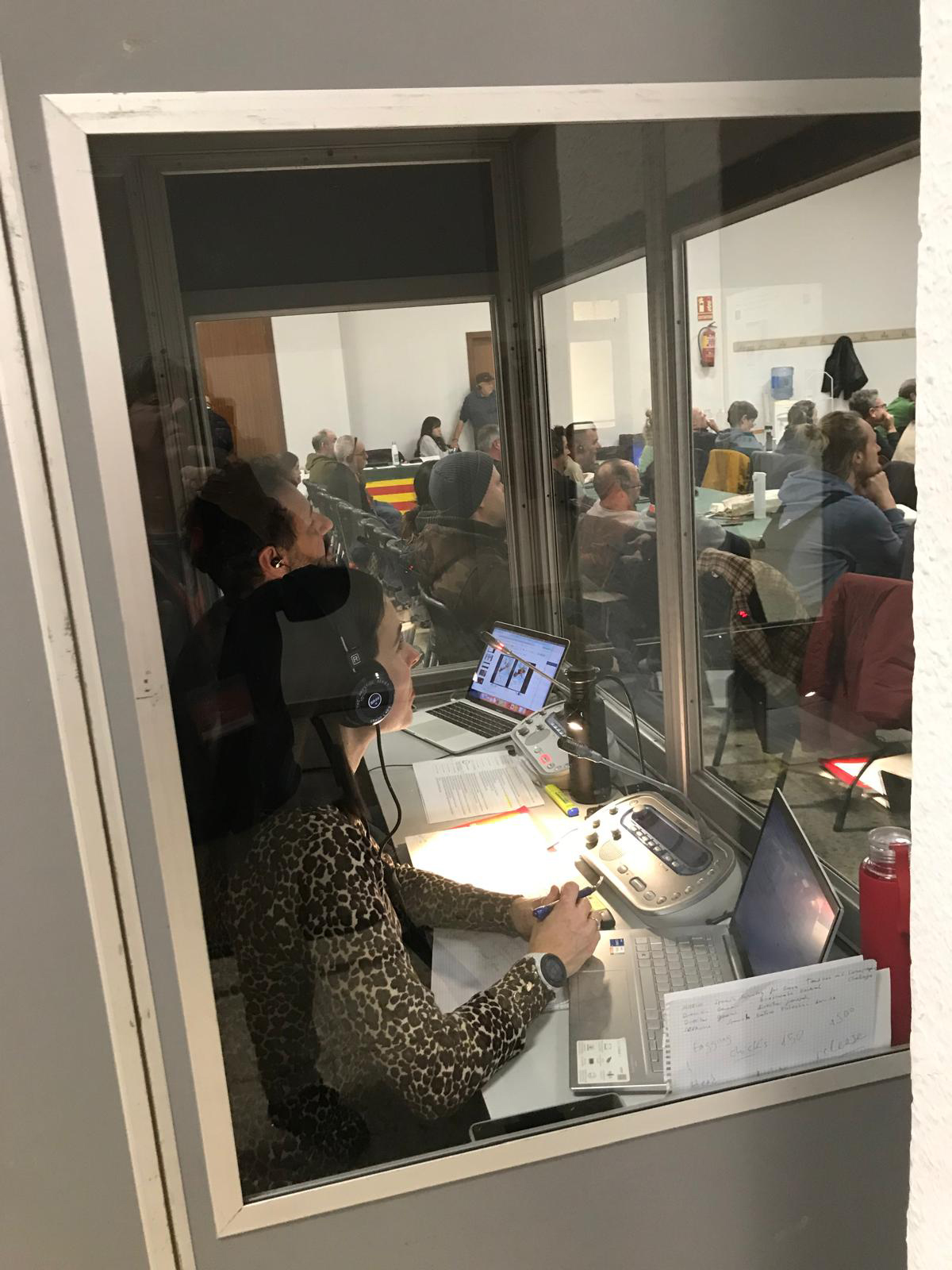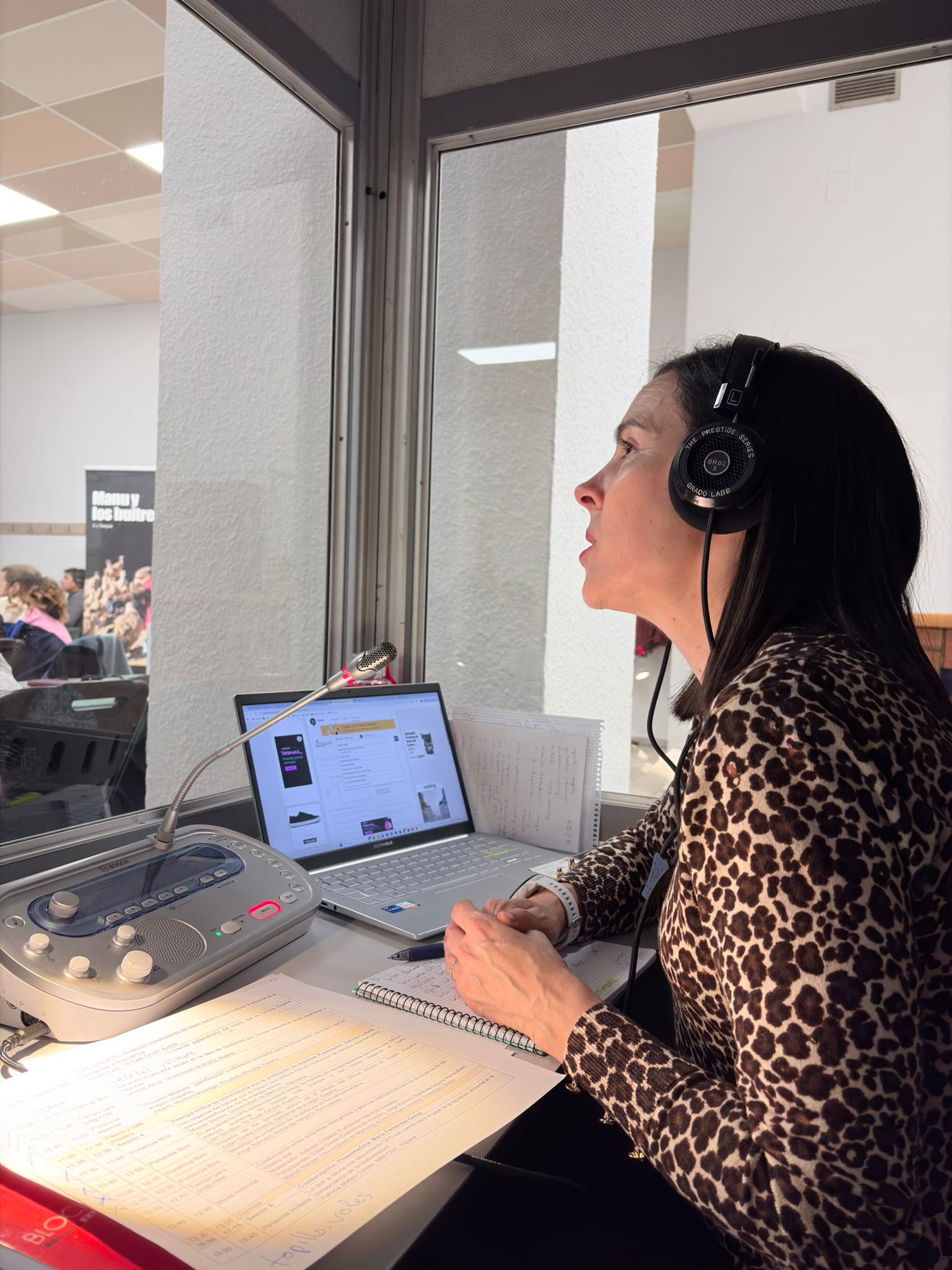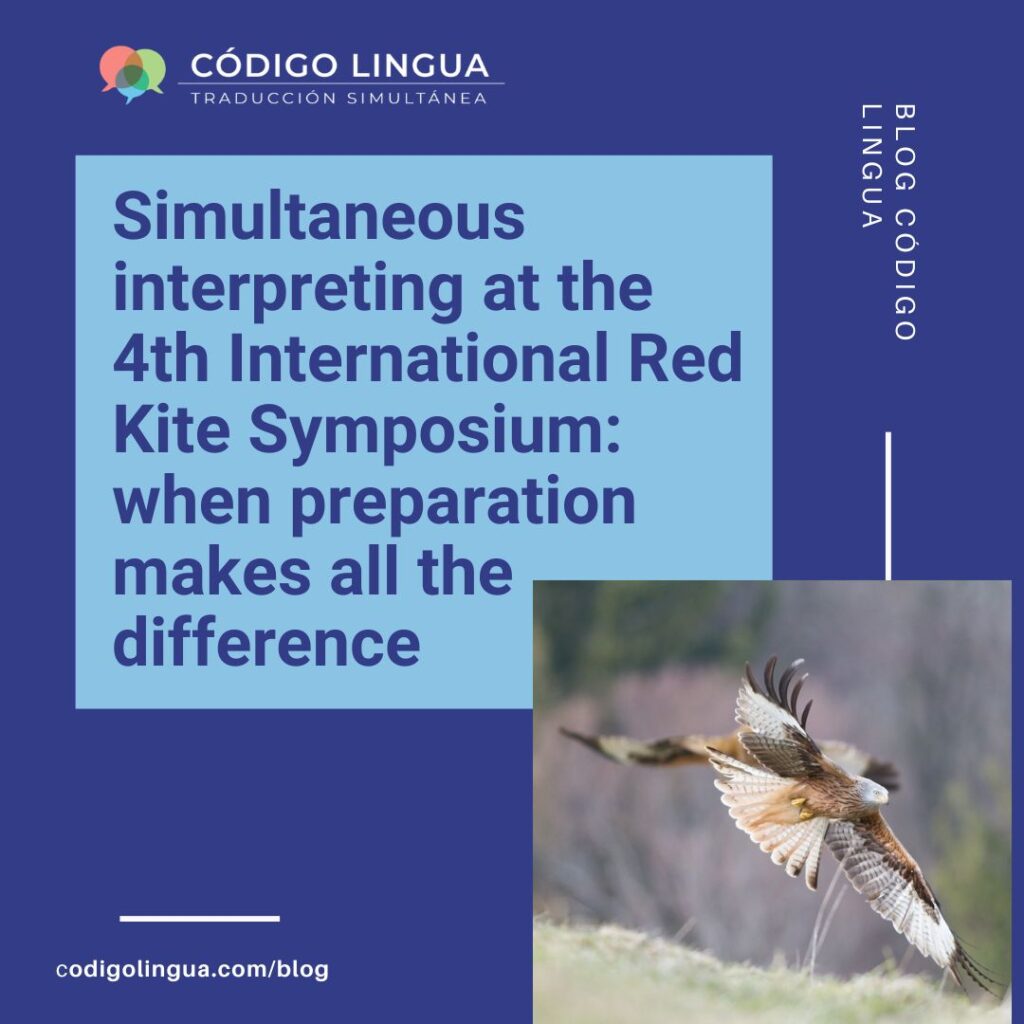
We recently had the privilege of providing English-Spanish simultaneous interpreting services at the 4th International Red Kite Symposium, held in Binaced (Huesca, Spain). This high-level scientific meeting brought together experts from across Europe to share their research on this iconic migratory bird and discuss its conservation.
At this type of highly specialized conference, interpreting does not begin on the day of the event. It begins months earlier, with planning, constant communication with the organizing committee, and rigorous technical and terminological preparation.
Months of coordination and adjustments with the client
From the early stages of the project, we worked closely with the conference organizing committee to define the linguistic and technical requirements. Over the preceding months, the program evolved and was reflected in budget updates, which is common in scientific conferences of this magnitude. Maintaining fluid and transparent communication, anticipating the client’s needs, and offering flexible solutions was key.
Thorough preparation for a highly specialized conference
The 4th International Red Kite Symposium brought together ornithologists, biologists, geneticists, conservationists, environmental managers, and representatives from various public administrations, with presentations covering topics ranging from migration and population genetics studies to conservation strategies and environmental policies.
To ensure accurate and rigorous interpretation, we spent several days in intensive preparation, which included:
- Studying the scientific program and abstracts
- Compiling a specialized glossary (ornithology, biology, conservation, genetics, ecology, environmental policies, international regulations)
- Reviewing literature and technical terminology in English and Spanish
- Coordinating between interpreters to keep consistency in terminology
In scientific contexts, the quality of interpretation depends directly on this prior preparation. It is not just a matter of translating words, but of conveying complex concepts accurately and naturally.
Coordination with the technical equipment company
In addition to the linguistic aspect, this project required a detailed technical assessment of the room to determine which equipment would be provided by the client (microphones, lecterns, etc.) and which would need to be provided by us (booths, receivers, etc.). This avoids duplication and ensures that all the necessary equipment is available. It is worth mentioning the expertise of the sound technicians, who specialize in events with simultaneous interpretation and are constantly monitoring the sound to ensure it is of the highest possible quality, allowing us interpreters to do our job in the best possible sound conditions.
Interpreting in action: accuracy, fluency, and customer recognition
Once the conference began, all the preparatory work resulted in simultaneous interpreting that was fluent, accurate, and in line with the scientific level of the even.
The presentations addressed highly technical topics—from movement ecology and population genetics to conservation strategies—which required specialized terminology and a great ability to adapt in real time.
Thanks to our terminology preparation and coordination among interpreters, we were able to ensure clear communication between speakers and attendees, facilitating the exchange of knowledge among researchers from different countries.
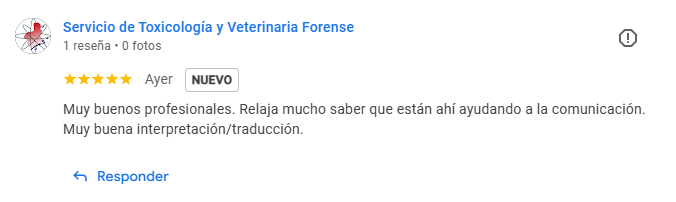
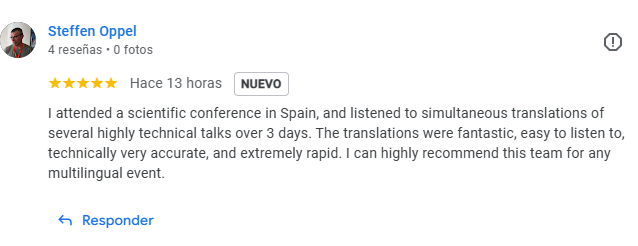
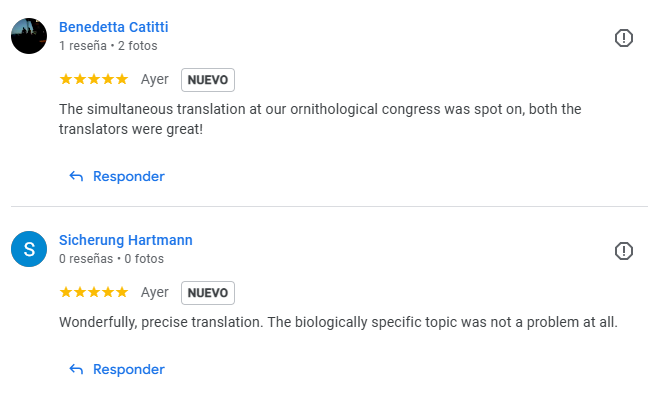
During the conference, we received constant praise from the organizers and participants, who highlighted the quality, accuracy, and naturalness of the interpretation. This recognition is undoubtedly one of the best indicators that well-planned work pays off.

Seeing red kites up close: a unique experience
As interpreters, we don’t always have the opportunity to see firsthand the subject of the conference we are working on. On this occasion, we were very fortunate to participate in a field trip to Binaced to observe red kites at their roosting site.
As evening fell, more than 500 red kites gathered on the outskirts of the village in an impressive natural spectacle. Seeing so many birds gathered together in person was an unforgettable experience and a reminder of why these scientific meetings are so important for the conservation of biodiversity.
For us, it was also a way to connect linguistic work with the scientific and natural reality that motivates it. We took away an indelible memory of this conference.
Interpretation as a bridge to science
Events such as the 4th International Red Kite Symposium demonstrate that professional interpretation is a key element in international scientific communication. It allows researchers from different countries to share knowledge, discuss results, and collaborate without language barriers.
At Código Lingua, we believe that excellence in interpreting is based on three pillars: planning, preparation, and technical coordination, always with a smile and demonstrating professionalism as well as approachability.